
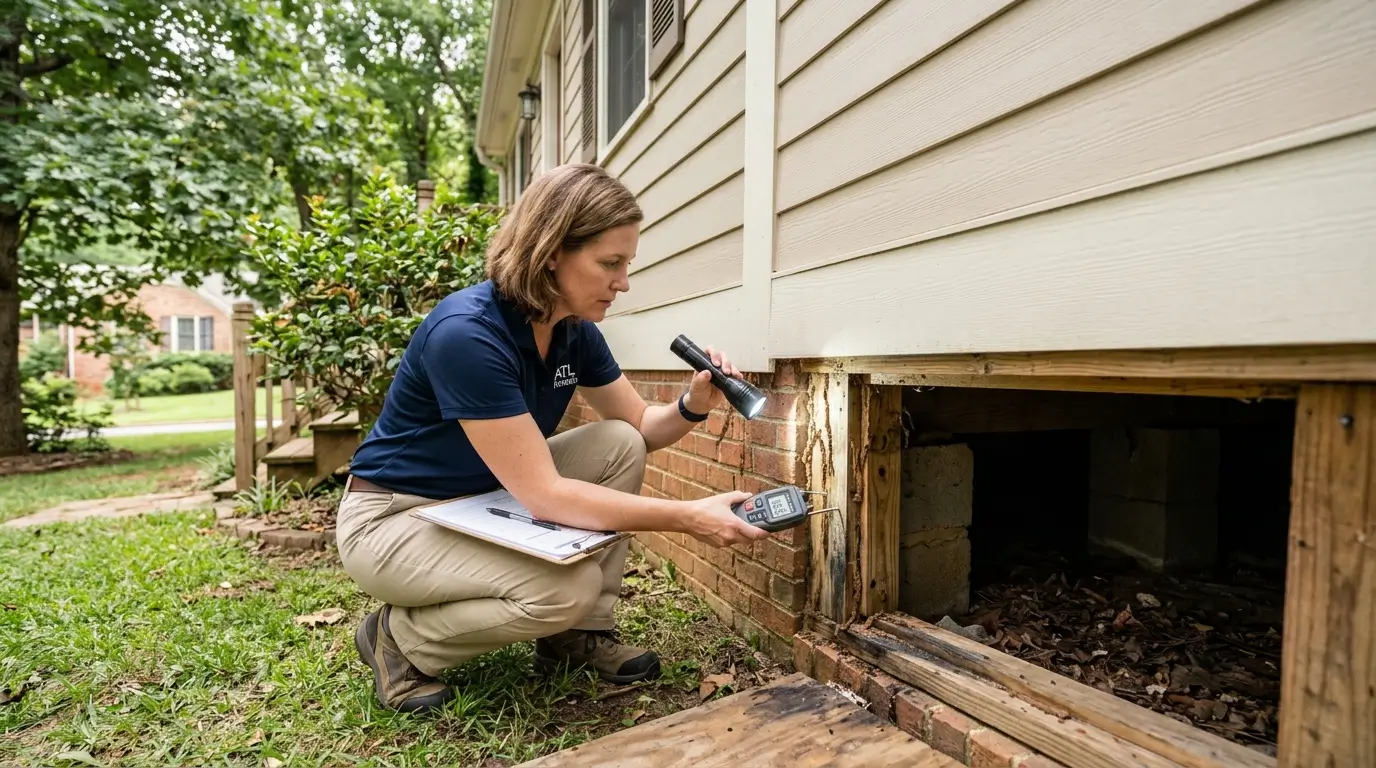
Most rental damage announces itself with a phone call. Termite and moisture damage doesn’t. It works behind baseboards, inside crawlspaces, and under siding for months before anyone notices, and by then a small, scheduled inspection has become a structural repair. For Metro Atlanta owners, the combination of warm, humid weather and soil that termites call home makes this one of the more predictable ways a good rental gets expensive.
Key Takeaways
University of Georgia Extension says termites are most abundant in the Southeast, though structural infestations aren’t inevitable and depend heavily on maintenance, landscaping, and moisture conditions.
Native subterranean termites typically begin swarming in January and finish by early June, and they swarm in daylight and aren’t attracted to lights.
UGA advises against treating termites yourself and recommends confirming that any company is licensed by the Georgia Department of Agriculture.
Termite contracts come in two types, retreat only and retreat and repair, and the difference decides who pays for damage.
EPA says to keep indoor humidity below 60 percent and dry anything wet within 24 to 48 hours.
Why Georgia Rentals Are Exposed
UGA Extension notes that termites are found in nearly every region of the country but are most abundant, and cause the most damage, in the Southeast. In a typical suburban yard, a resident population is likely feeding on wooden fence posts, landscape ties, stumps, fallen limbs, or firewood. The good news is in UGA’s Bulletin 1241: while subterranean termites are a normal part of the soil around buildings, a structural infestation isn’t inevitable, because susceptibility depends on construction type, home maintenance, landscaping, and conditions around the structure that favor termite activity. Those are all things an owner and a manager can influence.
What to Look For, and When
UGA’s guidance describes swarmers as male and female termites that fly in the spring, most commonly February to April in Georgia, and says termites build hollow mud tubes of moist soil and saliva to travel between the ground and wood. A separate UGA bulletin adds that native species typically begin swarming in January and are mostly finished by early June, swarm in the morning or early afternoon, and aren’t drawn to lights, so a swarm can easily go unnoticed. Common signs worth checking include mud tubes on foundation walls, piers, or plumbing penetrations, piles of discarded wings near windows and doors, wood that sounds hollow, and paint that bubbles in ways that mimic water damage. Because the swarm window opens in winter, the best time to book the year’s inspection is late winter, before spring peaks.
Moisture Is the Common Thread
UGA’s control principles for subterranean termites include annual inspections by a professional, water management to maintain a dry environment, and elimination of wood-to-ground contact. That overlaps neatly with EPA’s mold guidance, which says to keep indoor humidity below 60 percent, dry wet materials within 24 to 48 hours, keep gutters clean and repaired, make sure the ground slopes away from the foundation, and keep air conditioning drip pans clean and drain lines unobstructed. In practice, that means checking for slow plumbing leaks, confirming downspouts discharge away from the house, keeping firewood, lumber, and stumps off and away from the structure, and looking at crawlspaces and basements for dampness at every turnover. Georgia’s Safe at Home Act added a statutory duty to keep rentals fit for habitation, as our guide to the Act explains, which makes prompt moisture repairs more than a maintenance preference.
Reading a Termite Contract
UGA’s Dan Suiter explains that professional termite firms offer two types of contracts: one that treats a new or recurring infestation, often called a retreatment contract, and one that treats the infestation and also repairs new structural damage, the retreat-and-repair contract. With a retreatment contract, the company returns to retreat, but responsibility for damage generally falls to the property owner. With retreat and repair, the company pays to repair new structural damage as long as the contract terms are met. Contracts usually renew annually, and a claim typically requires meeting conditions spelled out in the agreement. For a rental, know who holds the contract, what it covers, when it renews, and who schedules the annual inspection. Also confirm any company is licensed: UGA notes that the Georgia Department of Agriculture regulates the pest control industry in the state.
Setting Tenant Expectations
Residents are often the first to see a swarm or a mud tube, so tell them what to look for and how to report it. Ask them to report leaks, musty odors, swarming insects, discarded wings, mud tubes, soft or hollow wood, and bubbling paint as soon as they notice, and make that simple through an online maintenance request process. Ask them not to stack firewood or store wood against the house, and not to try treating termites themselves, since UGA says homeowners should not attempt to treat a structure for termites. Add a short note to your move-in packet, and make sure your lease provides for access when an inspector needs to visit.
A Simple Calendar
Late winter: Schedule the annual termite inspection before spring swarm activity peaks.
Spring: Clean gutters, check downspouts and grading, and look for mud tubes and discarded wings after swarm days.
Summer: Watch humidity, condensation, and musty odors, and flush air conditioning condensate drains.
Fall: Check drainage and wood-to-soil contact before the wet season, and confirm contract renewal dates.
Every turnover: Inspect crawlspaces, basements, under-sink areas, and exterior wood, and photograph anything that needs follow-up.
Keep the Records
Termite claims and warranty disputes turn on paperwork. Keep each inspection report, treatment record, and contract renewal date, along with dated photos from move-in and move-out, so you can show what was inspected and when. Owners can find vendor bills and monthly statements in the owner portal, which makes it easier to tie an inspection or repair back to its invoice, and our financial reporting is built around that kind of transparency.
FAQ
When do termites swarm in Georgia?
UGA says swarmers most commonly appear from February to April, and that native species typically swarm from January through early June.
Can I treat termites myself?
UGA says homeowners should not attempt to treat a structure for termites and recommends hiring a licensed professional.
What’s the difference between termite contract types?
A retreatment contract treats the infestation, while a retreat-and-repair contract also pays to repair new structural damage if the contract terms are met.
How do I know a termite company is legitimate?
Confirm it’s licensed with the Georgia Department of Agriculture, which regulates the pest control industry in Georgia.
Catch It Early, Document It Always
Termites and moisture reward owners who inspect on a schedule and penalize those who wait for a symptom. A late-winter inspection, a dry crawlspace, a clear contract, and tenants who know what to report cost far less than structural repairs. If you’d rather have one person tracking inspections, renewals, and vendor work for each rental, our Atlanta property management team coordinates maintenance with trusted vendors at no markup.